Press Releases in Film: What They Are, How to Write One, and Why They Matter
Adams E. Akinsade · 15 October 2026
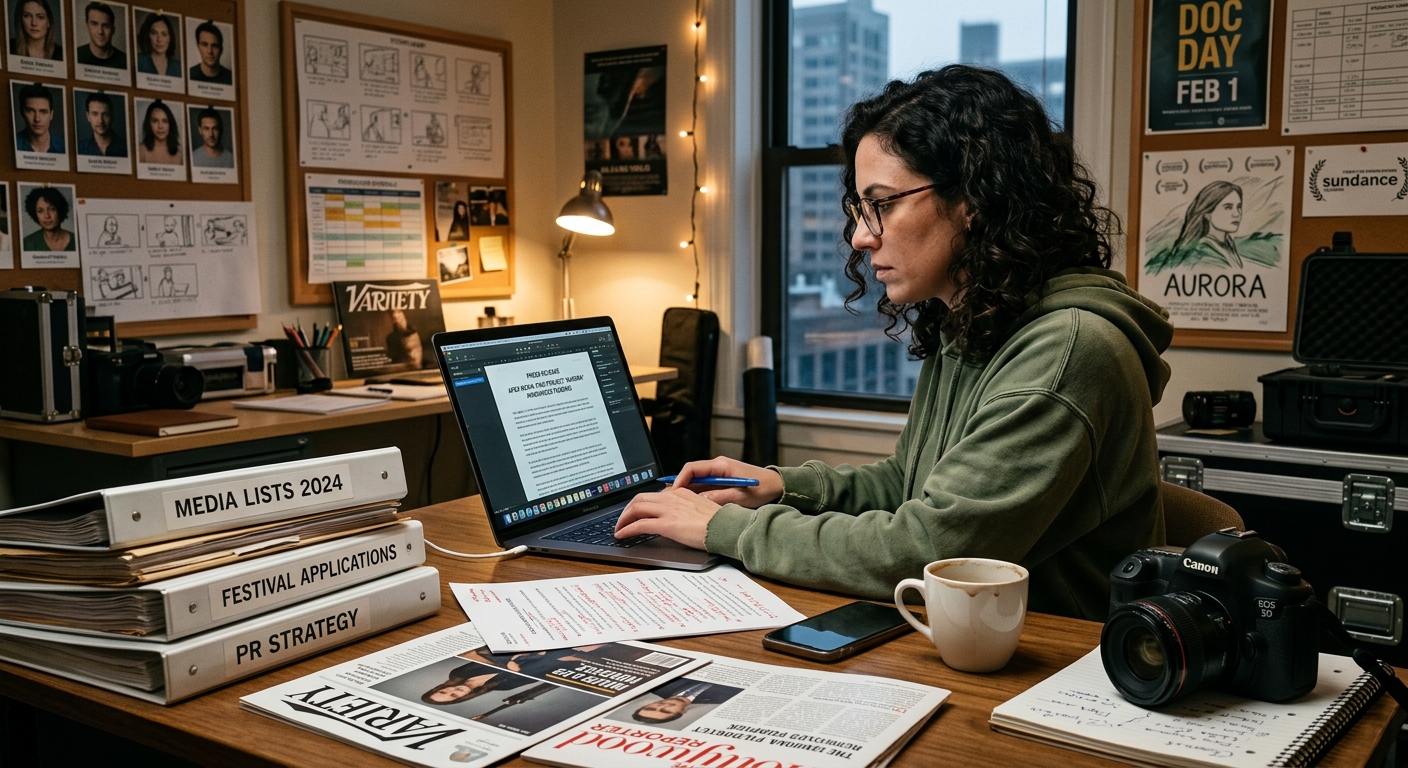
A press release (also known as a media release or news release) is a concise, formal written statement delivered to members of the news media. Its primary purpose is to announce something noteworthy, factual, and timely about your project or production company.
Unlike a marketing brochure or a social media post, a press release is not designed to sell directly to consumers. Instead, it provides journalists, editors, and industry publications with the facts and context they need to write a story about you.
The Standard Structure of an Effective Press Release
To be taken seriously by journalists and trade publications (like Variety, Deadline, or IndieWire), your press release must follow industry-standard formatting. Busy editors look for specific elements in precise locations.
Key Components:
FOR IMMEDIATE RELEASE: Signals to journalists that the information can be published right away.
Contact Information: Clear details (name, title, email, phone) for the person handling press inquiries.
Headline: A sharp, factual line (under 15 words) summarizing the news.
Subheadline: One sentence adding critical context.
Dateline: City, State/Country, and Date (e.g., LOS ANGELES, CA – October 15, 2026).
Lead Paragraph (The 5 Ws): Answers Who, What, When, Where, and Why in the first 2–3 sentences.
Body Paragraphs: Supporting details about the film, story premise, production timeline, or milestone.
Executive/Director Quote: An authentic statement highlighting vision, impact, or gratitude.
Boilerplate: A brief "About Us" paragraph describing your production company or granting partner.
End Notation: Marked by
###at the center of the page to indicate the end of the text.
How to Write an Effective Press Release (Without the Fluff)
To make your release stand out in an editor's crowded inbox, keep these guidelines in mind:
Lead with the News, Not the Drama: Journalists want hard facts. Avoid overly sensationalized adjectives like "groundbreaking," "revolutionary," or "life-changing." Stick to clear, objective statements.
Keep It One Page: A standard press release should rarely exceed 400 to 500 words. Keep it tight and scannable.
Make Quotes Count: Don't waste quote space repeating basic facts already in the body text. Use quotes to convey emotion, artistic intention, or strategic vision.
Include Accessible Assets: Always include a link to high-resolution press assets (still photos, key art, headshots, or trailers) stored in a clean digital press kit (EPK).
Why Press Releases Are Critical to PR Publications
Trade publications and entertainment journalists rely heavily on press releases for several key reasons:
1. Accuracy and Verification
When journalists write about your film, they need verified facts. A press release acts as an official record for correct spellings of names, titles, production partners, and release dates.
2. Time Efficiency
Entertainment outlets publish dozens of articles daily. A well-written press release allows an editor to quickly grasp the story, grab a quote, download hi-res images, and publish an article in minutes.
3. SEO and Backlinks
When trade outlets pick up and publish your press release online, they generate valuable backlink authority for your film's website, boosting your project's digital footprint and search engine ranking.
The Impact of a Press Release on a Film Project
For independent producers and directors, press releases deliver far more than short-term headlines—they drive momentum across the entire lifecycle of a film.
Builds Institutional Credibility: Announcing milestone achievements (such as securing non-dilutive grants, winning pitching forums, or locking top talent) signals to investors and distributors that your project has real market traction.
Creates a Digital Trail for Investors & Sales Agents: Long before distribution deals are signed, distributors and sales agents google your project. An established record of press releases proves professional management and ongoing visibility.
Strengthens Festival and Award Strategies: Generating press around your production phase builds early awareness among festival programmers and critics, laying the groundwork for a successful festival strategy.