Demystifying Film Grants: A Strategic Guide to Winning Non-Dilutive Funding for Your Next Project
Adams E. Akinsade · 15 October 2026
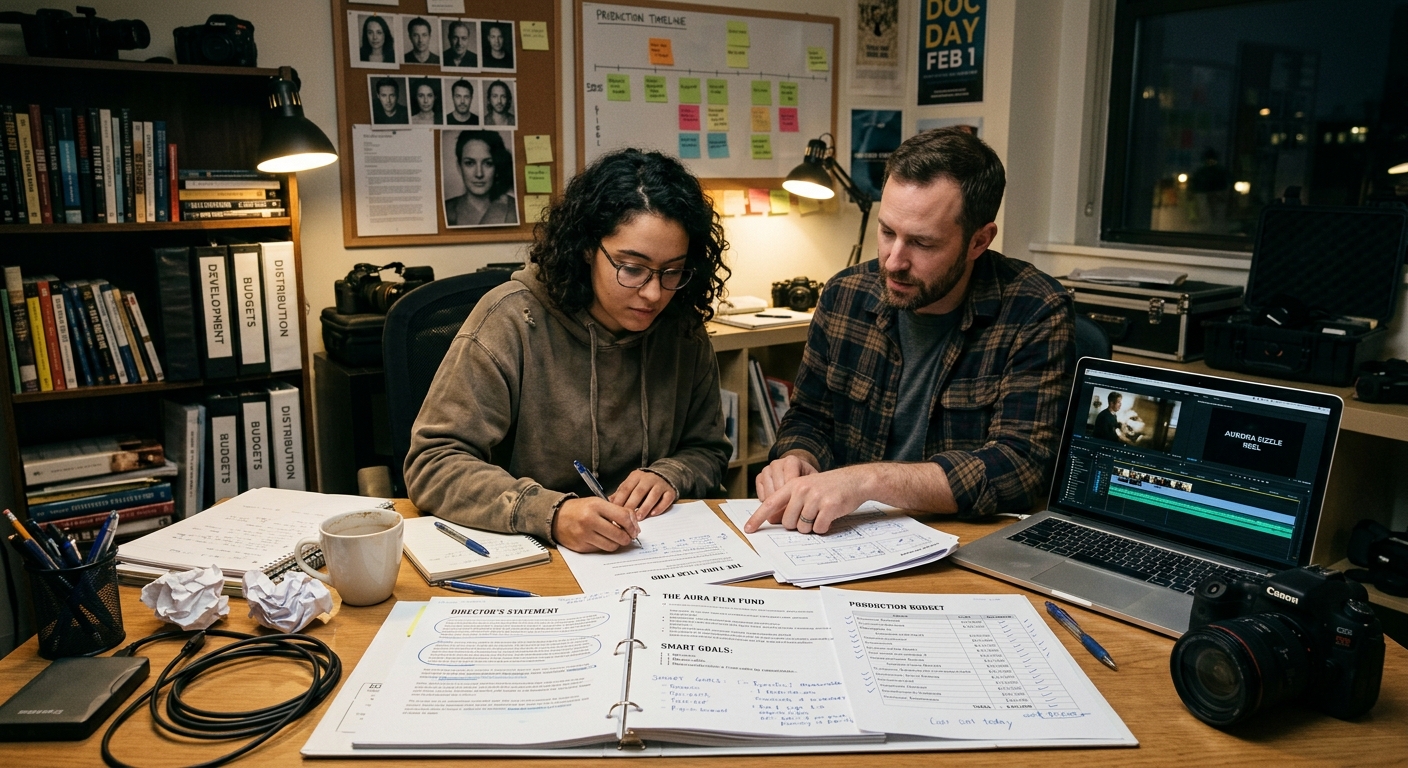
For independent filmmakers, non-dilutive funding money that doesn't require giving up equity or creative control is the holy grail of film financing. From developmental grants like the Hubert Bals Fund and Catapult Film Fund to major production and finishing grants from ITVS and Creative Capital, millions of dollars are awarded each year.
Yet, despite compelling stories and visual talent, the majority of filmmaker applications are rejected at the initial review stage.
Winning a film grant isn't just about having a great script or a stunning sizzle reel; it’s an exercise in strategic communication. Grant panels evaluate risk, viability, and alignment just as rigorously as artistic merit.
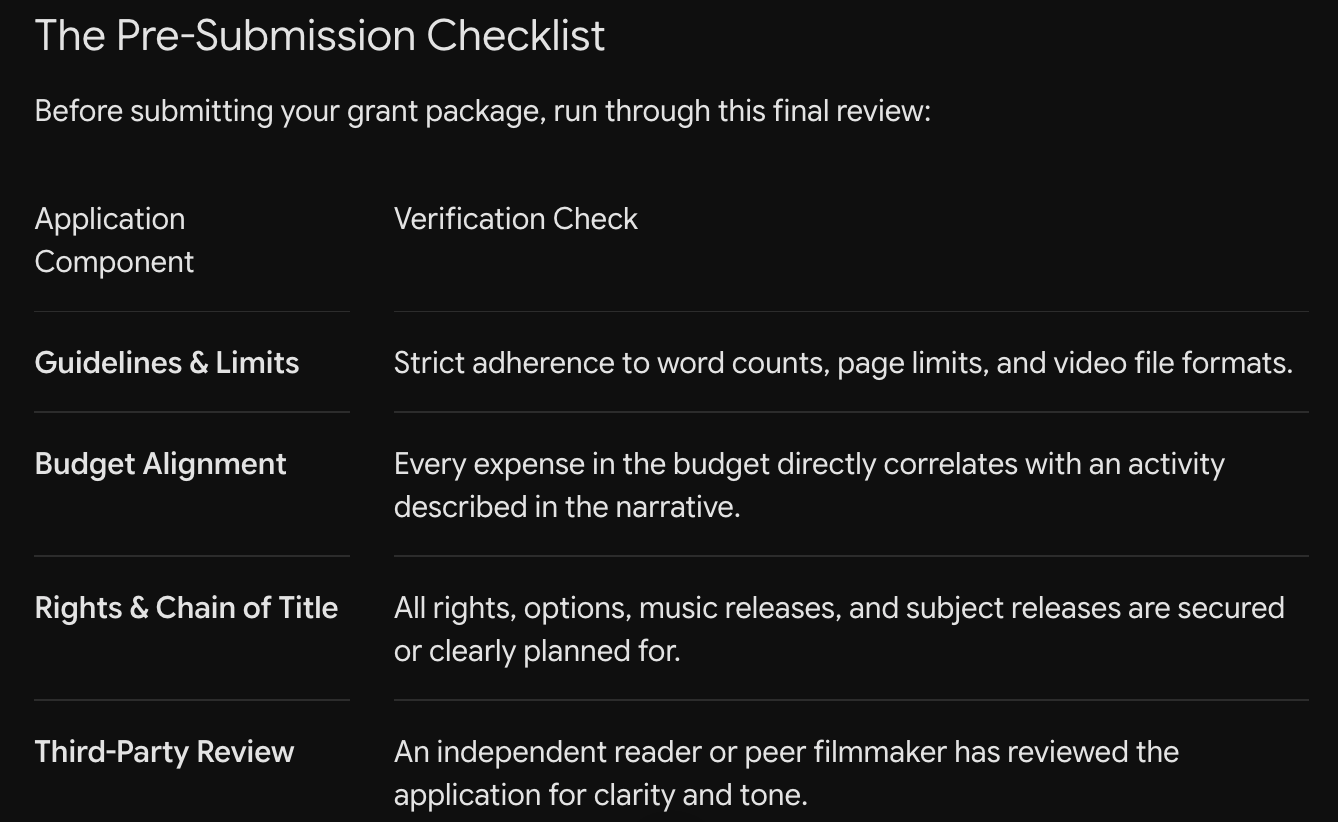
Here is a comprehensive strategy for building a high-converting film grant application that stands out to selection committees.
1. Master Funder Alignment: Look Beyond the Check
Before writing a single word of your director’s statement or assembling your pitch deck, you must evaluate funder compatibility.
Grant organizations are not equity investors seeking financial returns they are mission-driven institutions seeking cultural impact, artistic innovation, or specific narrative representation.
Analyze Past Grantees: Look at projects awarded by the fund over the past 3 to 5 years. Does your project sit comfortably alongside their track record in tone, scope, and subject matter?
Decode the Rubric: Read the Request for Proposals (RFP) or application guidelines closely. Pay attention to weighted criteria. Is the panel prioritizing directorial vision, community impact, feasibility, or technical innovation?
Target the Right Stage: Applying for production funds with an early-stage draft is an immediate red flag. Ensure your project phase matches the grant category (Development, Production, Post-Production, or Distribution).
2. Craft a Direct, Jargon-Free Logline and Synopsis
The initial review phase is brutal. Panel readers often evaluate dozens of applications a day. Your logline and short synopsis must anchor the project immediately.
Avoid Overly Abstract Language: Artistic prose has its place in a director’s statement, but your synopsis must clearly state who the story is about, what the central conflict is, and what is at stake.
Balance Narrative and Form: In documentary applications, clearly delineate between the subject matter and the cinematic approach. Panelists want to know how you intend to capture the story visually, not just the topic itself.
3. The Director's Statement: Articulating Your "Why" and "Why You"
The Director’s Statement is often the most scrutinized section of any film grant application. Grant committees back filmmakers, not just projects. They need to know why this story must be told now and why you are uniquely positioned to tell it.
Focus on answering three key questions:
Artistic Vision: What is your specific cinematic approach? How do camera movement, sound design, editing pace, and visual palette serve the core themes?
Personal Connection: What authentic relationship or deep insight do you bring to this material?
Cultural Relevance: Why is this story urgent in today's social, political, or artistic landscape?
Pro Tip: Avoid generic statements like "I've wanted to make this film my entire life." Instead, highlight specific creative choices: "By pairing hand-held 16mm cinematography with immersive ambient soundscapes, we intend to place the viewer directly inside the protagonist's sensory experience."
4. Build a Transparent, Feasible Production Budget and Timeline
A brilliant artistic vision combined with an unrealistic budget indicates high risk. Grant panels will scrutinize your financial structure to ensure the project can actually cross the finish line.
Key Budgetary Principles:
Realism Over Optimism: Ensure line items reflect current industry rates for crew, equipment rentals, permits, post-production, and festival strategies.
Match Funding & In-Kind Support: Panels love to see momentum. If you have secured corporate sponsorships, tax credits, soft money, deferred fees, or in-kind donations (e.g., donated equipment or location access), explicitly reflect them in your budget.
The Grant's Impact: Clearly indicate where this specific grant money will go. If a grant is $30,000 for a $200,000 project, identify the precise line items that funding will unlock (e.g., color grading, archival licensing, or sound mixing).
5. Elevate Your Visual Sample and Teaser
For film grants, your visual sample carries equal—if not greater—weight than the written application.
Prioritize the First 2 Minutes: Panelists rarely watch a 10-minute sample in full if the opening moments fail to engage. Hook the reader immediately with high production value, strong sound design, and clear narrative pacing.
Provide Context: Always use the sample description text to explain what the panel is watching (e.g., "Rough cut scene from Act II," or "Concept teaser shot on location").
Fix Audio First: Bad visual quality can sometimes pass as an stylistic choice; bad audio immediately signals amateur execution. Ensure dialogue is crisp and sound design is balanced.